Indeed, in the creation of the heavens and the earth and the alternation of the day and night, there are signs for people of reason. (3:190)
In the name of God, the one who created everything, everything from nothing with his supreme will and established divine order in all things. He says that it’s not destined for the Sun to catch up with the orbit of the Moon, nor is it designed for the Moon to get caught in the path of the Sun, symbolizing that everything in the cosmos, from stars to the subatomic particles, moves in its predetermined course. Ayahs like this can be found in abundance in the Qur’an. They inspired our forefathers to look to the cosmos and reflect on their creator. They mapped the stars, traced orbits, calculated trajectories, improved navigational skills, built observatories, invented instruments for more accurate timekeeping, and so on. Monumental work that ultimately led to more than two-thirds of prominent stars bearing Arabic names.
In other words, our Muslim predecessors knew how to READ the heavens.
As we’re approaching Ramadan, there’s no better way to explain Islam’s harmony with the cosmos. Astronomy is the study of celestial bodies such as the moon, the sun, planets, stars, galaxies, and other cosmic phenomena, and it has always been a subject of interest and curiosity for humans. Islam actively embraces this curiosity, repeatedly drawing attention to the study and observation of the skies. This area of knowledge occupies a special place in our religion, which may be regarded as the last remaining monotheistic creed that encourages its followers to observe the sacred nature and derive insights from it. Forgive me, I write this not to invoke pride in historical Islamic traditions, but as a humble effort to inspire and revive the long-lost spirit of achievement that characterized our religious predecessors.

The birth of a new month is announced after successfully observing a celestial object: the moon. This is a rigorously practiced tradition/sunnah on the 29th evening of every lunar month, particularly during Ramadan. Think about this for a second; the news that brings immense joy that the month of mercy has reached us starts with an astronomical observation! If you didn’t know before, the word "month" originates from the lunar cycle, referring to the time it takes the Moon to complete its phases (about 29.5 days). Then Muslims observe fasts by tracking the position of the sun. Fasting begins at dawn and ends at sunset, making the sun an essential reference for daily worship. The prayer times are also determined by the position of the sun. The direction of the Qiblah, which we’ve calculated to perform our salah every day, is also a direct consequence of astronomy. The heavens are deeply intertwined with a Muslim’s daily life, knowingly or unknowingly. Astronomy, to me, as one of the liberal arts, is not just looking up at the stars; it is more about looking inwards into your nafs that changes perspectives and perceptions. Not everyone gets that, but to experience it, one needs a framework known as Contemplation/Tafakkur.
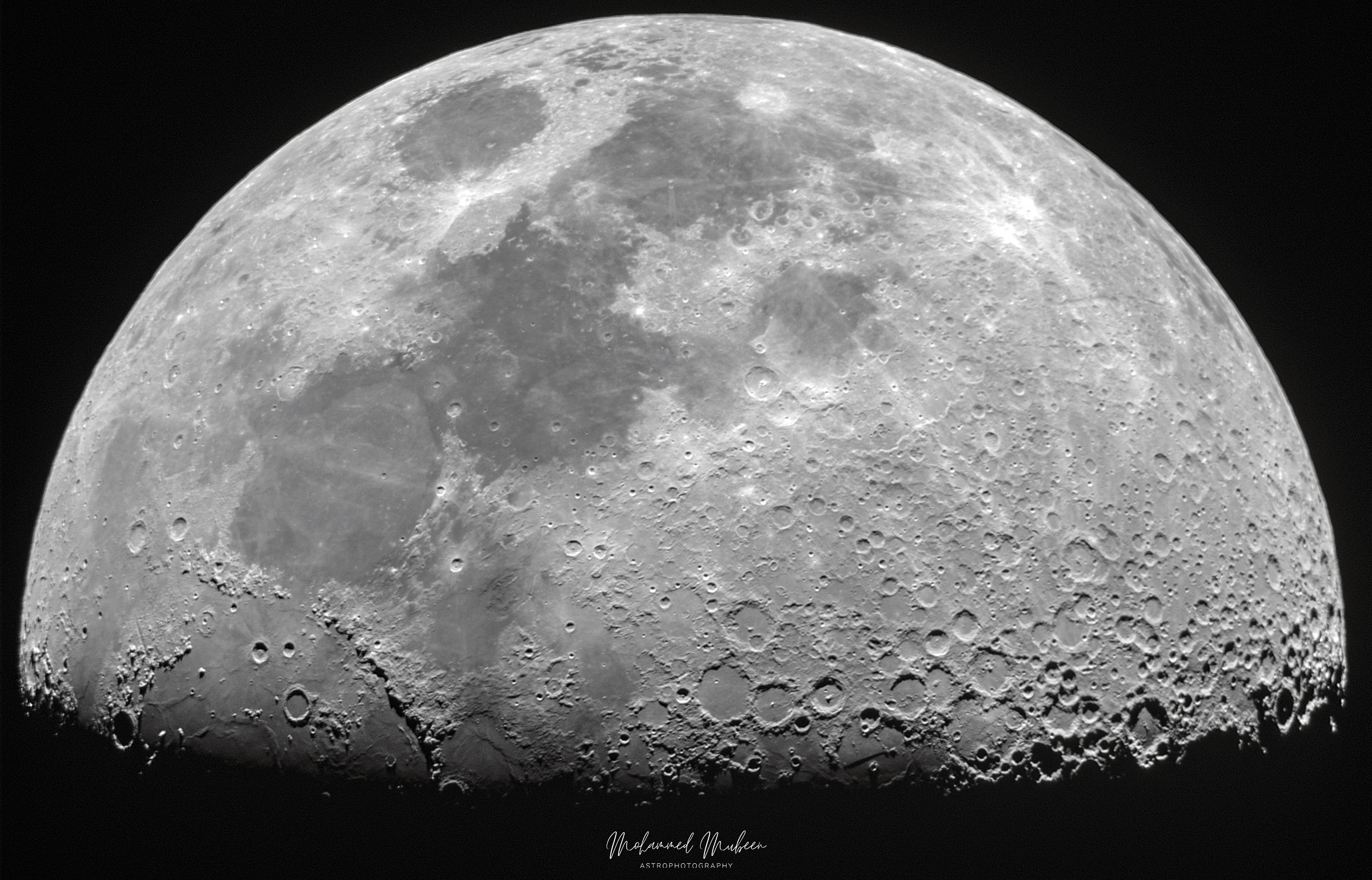
Have they not then looked at the sky above them? How we built it and adorned it with stars, leaving it flawless? (50:6).
It cannot be a coincidence that the Qur’an was revealed to the prophet (peace be upon him) in a cave. One of the reasons he ﷺ often retreated to the cave was to distance himself from the distractions of society and reflect on the creation and the creator. A view of the unobstructed heavens above and the immoral humanity below moved him ﷺ to question deeply about life and death. The vast order of the perfect cosmos standing in stark contrast to the chaos of the humanity down below made him ﷺ reflect profoundly on human purpose. Then came the answers from the creator Himself. The first sign “Read in the name of your Lord who created” was revealed in a simple cave where contemplating life’s real, important questions was his ﷺ only pastime. Seeking answers is the natural way of discovering the truth. Tafakkur or contemplation is really the key.
This is a blessed Book which We have revealed to you ‘O Prophet’ so that they may contemplate its verses, and people of reason may be mindful (38:29).
Ramadan is the month of Qur’an, prayer, remembrance (Dhikr) and reflection which In Sha Allah brings us closer to our Creator. It is often the only time we try to reduce our screen time and focus on keeping our presence in the present. The Qur’an invites its readers to not just read and recite but also ruminate on its verses. The Prophet ﷺ experienced the physical heaviness of these ayahs upon revelation, as the direct words of Allah carried spiritual gravity and seriousness. The prophet ﷺ did not have blind followers, rather his beloved companions were critical thinkers. Mindful reflection leads to awareness, and being aware in a world of passive thinkers is a luxury.
What better time in our lives than Ramadan to practice tafakkur, the very month in which the glorious Qur’an was revealed as a result of his ﷺ tafakkur? In this day and age of digital distraction and reduced attention span, thanks to social media, practicing reflection can feel hard but it does not have to be. Simply reflecting on one’s presence and carrying out our usual daily actions with clear intentions would be a good place to begin. If reading and reflecting on a whole chapter feels strenuous, start with a few pages. If that is still challenging, focus on just a few verses. Being mindful of our salah movements and the dhikr we observe during those movements is vital (Refer to Sheikh Adnan’s Tazkiya series). Multitasking does not have to be the norm. Take things one at a time. Slowly but surely. A few minutes a day until it becomes a habit is ideal.
As an ummah, we have lost the art of meditating, and it is something we should have addressed sooner. The Islamic Golden Age emerged because its scholars understood the connection that Allah spoke of, the obsession to wonder, discover, and understand the divine design. Al-Biruni, in the 11th century, calculated the circumference of the Earth to a stellar 99% accuracy. Al-Battani and Ibn-Shatir corrected Ptolemy’s planetary models. What could have motivated them? In the modern day, we have lost that connection that produced pioneers and polymaths. We have to restore this overlooked tradition that once made us the people of reason in the sight of Allah. May we contemplate more on the Qur’an this month that allows us to appreciate and draw us closer to him. Ramadan Kareem!